
2026 Best Clear Glass Jar Types for Wholesale Buyers?
For wholesale buyers, choosing a Clear Glass Jar is more than a style decision. The right shape can make a product easier to fill, display, label, and ship. Straight-sided jars suit clean shelf presentation; wide-mouth jars simplify access to chunky contents. Hexagonal designs stand out, but their cartons may need more careful packing. Small details matter. A lid that feels loose in a sample can become a costly issue across a large order.
Industry data offers useful context. FEVE’s 2022 market report put Europe’s glass packaging collection-for-recycling rate at 80.1 percent. That figure supports glass’s role in established recycling systems, though actual results depend on local collection and processing. FEVE Secretary General Adeline Farrelly has emphasized that glass can be recycled repeatedly without losing material quality. Buyers should still check the practical details: glass weight, recycled content, closure compatibility, and breakage performance.
This guide compares common jar types for wholesale purchasing, from pantry and preserve jars to cosmetic and specialty shapes. It also considers the trade-offs behind clear glass: product visibility is strong, but light-sensitive contents may need protection. A sample is not a shipment test. Request specifications, confirm tolerances, and assess a packed case before committing to volume. The best choice is not always the most decorative one. Sometimes the plain jar wins.
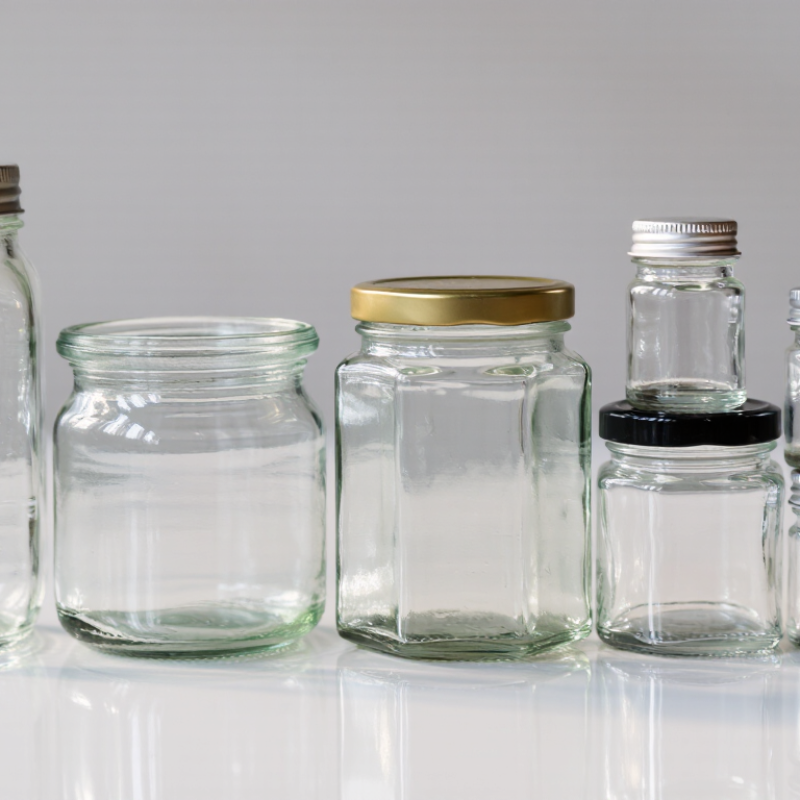
Table of Contents [Hide]
What Defines a Clear Glass Jar for Wholesale Use in 2026?
A clear glass jar for wholesale use in 2026 is more than a transparent container. Buyers need repeatable dimensions, consistent glass color, and a finish that accepts the specified closure. Small differences matter: a slightly uneven rim can affect sealing, while inconsistent capacity can complicate filling and labeling. Ask suppliers for dimensional tolerances, material details, and production samples before approving an order.
Clarity should be assessed under ordinary lighting, not just in a polished product photo. Check for bubbles, visible stones, scratches, and color shifts across several jars from the same sample batch. A clear wall also reveals the contents, which helps retail presentation but offers limited protection from light. That trade-off may not suit every product. It is easy to overlook.
Wholesale buyers should also compare weight, carton design, pallet stability, and expected breakage rates. A jar that looks elegant on a shelf may be inefficient to ship if its shape wastes carton space. Request packaging specifications and test a small shipment when possible. One weakness in sourcing is relying on a single approved sample; production runs can vary. Record the accepted jar dimensions, closure fit, and visual criteria in writing, then check delivered goods against them.
2026 Best Clear Glass Jar Types for Wholesale Buyers? - What Defines a Clear Glass Jar for Wholesale Use in 2026?
| Jar Type | Common Capacity Range | Typical Opening or Closure | Common Wholesale Uses | Wholesale Advantages | Key Considerations |
|---|---|---|---|---|---|
| Wide-mouth canning jar | About 125 mL to 1 L | Wide threaded finish; compatible lids depend on the jar’s specified finish | Preserves, sauces, pantry foods, beverages, and craft products | Wide opening makes filling, emptying, and cleaning easier; clear walls show the contents | Confirm the exact lid and finish combination. Jar suitability for heat processing depends on the product and the manufacturer’s instructions. |
| Straight-sided jar | About 30 mL to 500 mL | Often threaded; finish and cap style vary by size and supplier | Spreads, sauces, candles, cosmetics, and dry goods | Straight walls provide a broad area for labels and make contents easy to see | Check internal access, fill volume, and closure compatibility; capacities and dimensions vary across product lines. |
| Round food jar | About 100 mL to 1 L | Commonly threaded, with several finish and cap options | Honey, jam, pickles, condiments, and packaged foods | Familiar shape is easy to display and can suit both retail shelves and food-service packing | Allow for headspace and verify the closure’s sealing requirements for the intended product. |
| Hexagonal jar | About 100 mL to 500 mL | Usually a threaded finish; closure options are supplier-specific | Honey, preserves, gift foods, and specialty pantry products | Faceted sides create a distinctive shelf appearance while keeping the contents visible | Check how the shape packs into cartons and whether label placement is suitable for the available flat surfaces. |
| Small spice jar | About 30 mL to 150 mL | Threaded cap; shaker or sifter inserts may be available | Spices, herbs, seasoning blends, and small dry ingredients | Compact format supports portioned products and clear identification of contents | Insert fit, dispensing-hole size, and moisture protection should match the contents and filling process. |
| Apothecary-style jar | About 250 mL to 2 L | May use a threaded lid, stopper, or other specified closure | Confectionery, bath products, dry goods, and decorative retail displays | Larger, visible presentation can work well for products sold by appearance | Some designs have a narrower opening or taller profile; check access, shelf clearance, and shipping protection. |
| Clear glass jar for cosmetics | About 5 mL to 250 mL | Commonly threaded; compatible liners or inner components depend on the package design | Creams, balms, masks, and other personal-care products | Transparent glass presents the product color and texture without adding a tinted glass appearance | Clear glass does not provide the same light protection as opaque packaging. Assess light sensitivity, product compatibility, and hygiene requirements. |
Wholesale selection note: “Clear glass jar” generally describes a transparent glass container that allows the contents to be seen. Glass composition, dimensions, capacity, finish, closure compatibility, food-contact suitability, and packing specifications vary by product. Confirm these details with the supplier before ordering; the capacity ranges above are indicative examples, not universal standards.

© 2023 Integrated Modular Solutions. All Rights Reserved