Choosing custom built shipping containers in 2026 requires more than comparing steel prices. The right unit must match its cargo, location, handling method, and expected service life. A refrigerated container needs stable insulation, dependable power, and clear temperature monitoring. A workshop container needs ventilation, lighting, safe wiring, and practical access points. Small design errors become expensive at the port.
UNCTAD’s Review of Maritime Transport 2024 describes continuing volatility in freight markets, vessel routing, and supply-chain capacity. Container xChange’s 2025 market analysis also highlights changing equipment availability and price differences between regions. These reports suggest a useful lesson: availability today does not guarantee suitability tomorrow. A cheaper standard box may require costly modifications, while a purpose-built unit can reduce operational friction. Not always, though. Poor specifications can make “custom” an expensive label.
Lars Jensen, CEO of Vespucci Maritime, has said, “There is no such thing as a new normal in container shipping.” His observation matters when selecting custom built shipping containers for long-term use. Buyers should request corrosion protection details, structural drawings, payload limits, certification records, and maintenance requirements. Ask where the container will operate. Salt air, winter roads, uneven yards, and frequent crane lifts each change the specification. Measure the door opening twice. It sounds basic, but mistakes happen.
This guide explains how to compare manufacturers, materials, insulation systems, security features, and lifecycle costs in 2026. It also questions a common assumption: the most technically advanced container is not automatically the best investment. Performance must serve the actual job.Winvalid
How to Choose Custom Built Shipping Containers in 2026?
Custom-built shipping containers are engineered steel enclosures, not simply oversized boxes. Their purpose determines the design. A transport unit needs compliant dimensions, corner fittings, payload capacity, and safe lifting points. A site unit may need insulation, ventilation, electrical systems, fire protection, or reinforced doors. These requirements can conflict. More steel does not automatically mean better performance.
UNCTAD’s Review of Maritime Transport 2024 reported that global maritime trade grew by 2.4% in 2023. It also projected average annual growth of about 2.1% through 2029. This supports continued demand for reliable container equipment. However, custom units used for international transport should meet applicable ISO 668 dimensions and CSC inspection requirements. A workshop-built container may look suitable, yet fail approval because of altered corner posts or excessive tare weight.
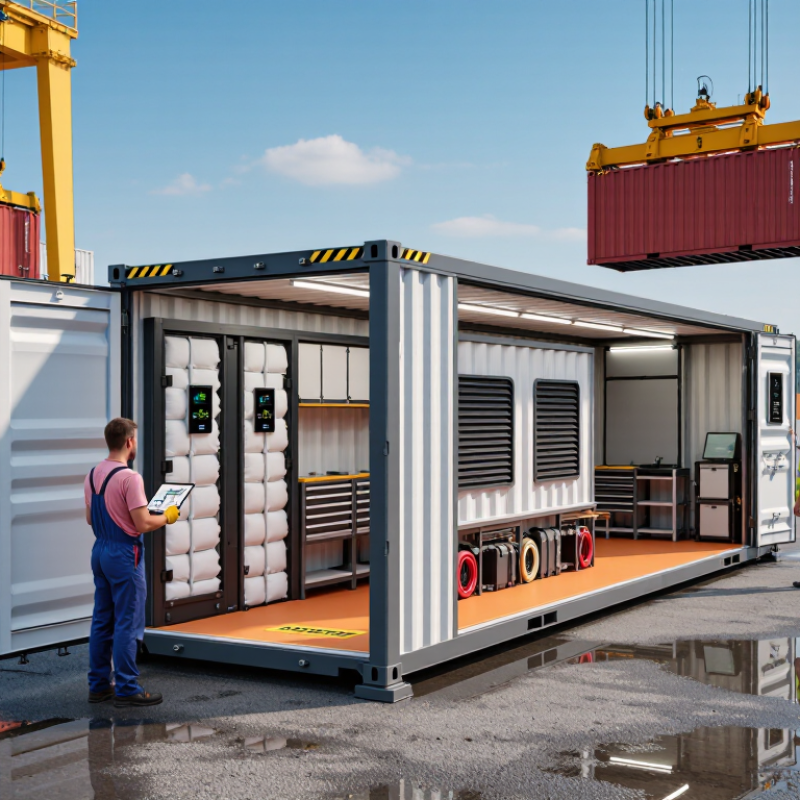
In 2026, practical uses will extend beyond cargo movement. Companies may install insulated units as mobile offices, refrigerated storage, equipment rooms, or emergency-response facilities. Renewable-energy projects may use containers for batteries, inverters, and control equipment. The International Energy Agency expects global renewable capacity to expand sharply through 2030, increasing demand for protected technical spaces. Choose insulation by climate, not habit. Check airflow around heat-producing equipment. Confirm floor loading with real equipment weights. A larger container is not always wiser. I would question any quote that hides steel thickness, coating details, certification, or maintenance access. The cheapest design can become expensive after condensation, corrosion, and difficult repairs appear.
How to Choose Custom Built Shipping Containers in 2026?
Defining Your Space, Cargo, and Performance Requirements
A custom container should begin with your working space, not its exterior appearance. Measure the longest item, widest access route, and required clearance around each load. A forklift needs turning space. A technician needs safe walking room. These details are easy to overlook.
Cargo conditions determine the build. Heavy machinery may require reinforced floors, cross-members, and carefully placed lifting points. Sensitive equipment may need insulation, ventilation, humidity control, or temperature monitoring. UNCTAD’s Review of Maritime Transport 2024 recorded 12.3 billion tons of seaborne trade in 2023. That scale shows why cargo protection and handling efficiency deserve serious planning.
Performance requirements should include payload, stacking, corrosion exposure, security, and transport frequency. Standard external dimensions can simplify handling, but internal modifications may reduce usable space. A wider door sounds helpful. It may weaken wall structure without proper reinforcement. Think about drainage near the threshold, cable entries, lighting, and future repairs.
Do not design around today’s cargo alone. Products change.
An experienced fabricator should verify load paths, ventilation rates, insulation values, and lifting limits before production. Request drawings, material specifications, inspection records, and applicable container certification details. A common planning mistake is choosing maximum capacity without checking the site’s foundation or crane access. The container may perform well at sea, yet fail during installation. That uncomfortable possibility deserves attention early.
| Application | Recommended Base Size | Typical External Dimensions | Typical Internal Volume | Typical Payload Range | Key Cargo or Space Requirements | Recommended Performance Features |
|---|---|---|---|---|---|---|
| General cargo storage | 20-foot standard container | 6.06 m L × 2.44 m W × 2.59 m H | Approximately 33 m³ | Approximately 25,000–28,000 kg, depending on tare weight and certified gross mass | Cartons, pallets, machinery parts, tools, and non-temperature-sensitive goods | Lockable personnel door Ventilation Anti-condensation treatment |
| High-volume freight | 40-foot high-cube container | 12.19 m L × 2.44 m W × 2.90 m H | Approximately 76 m³ | Approximately 26,000–29,000 kg, depending on tare weight and certified gross mass | Bulky but relatively light goods, large cartons, furniture, retail inventory, and equipment | Additional headroom Racking layout Wide access doors |
| Long or oversized cargo | 40-foot open-top or flat-rack configuration | Base length approximately 12.19 m; width commonly 2.44 m | Depends on frame and cargo profile | Often approximately 25,000–40,000 kg, subject to equipment rating and route limits | Heavy machinery, pipes, timber, industrial modules, and cargo loaded by crane | Removable roof or side structure Lashing points Reinforced floor |
| Temperature-sensitive goods | 20-foot or 40-foot insulated container | Uses a standard container footprint; internal dimensions are reduced by insulation and equipment | Typically lower than the equivalent standard container | Commonly approximately 20,000–27,000 kg, depending on configuration | Food, pharmaceuticals, chemicals, or materials requiring controlled temperature and humidity | Insulated panels Heating or cooling system Temperature monitoring |
| Moisture-sensitive cargo | 20-foot standard or insulated container | 6.06 m L × 2.44 m W × 2.59 m H for a standard external envelope | Approximately 33 m³ before interior modifications | Approximately 25,000–28,000 kg, subject to tare weight and certification | Electronics, paper, textiles, packaged food, and corrosion-sensitive components | Desiccant mounting points Sealed openings Raised floor Humidity sensors |
| Workshop or site office | 20-foot or 40-foot modified container | Standard external envelope with doors, windows, and service penetrations added | Approximately 33 m³ for 20-foot; approximately 67 m³ for 40-foot standard height | Payload is reduced by insulation, partitions, utilities, and installed equipment | People, workbenches, electrical systems, tools, and regularly accessed materials | Insulation Electrical distribution Emergency exit Fire-rated finishes where required |
| Heavy industrial equipment | 20-foot heavy-duty or flat-rack configuration | Approximately 6.06 m L × 2.44 m W; verify internal clearances before fabrication | Usually less important than floor loading and access | Must be calculated from container rating, axle limits, lifting points, and transport route restrictions | Transformers, generators, pumps, engines, and dense equipment with concentrated loads | Load-spreading steelwork Certified lifting points Engineered tie-downs |
| Secure high-value storage | 20-foot standard or custom high-security container | Typically 6.06 m L × 2.44 m W × 2.59 m H externally | Approximately 33 m³ before security modifications | Approximately 25,000–28,000 kg, less the tare weight of security additions | Tools, batteries, sensitive equipment, spare parts, and controlled inventory | Multi-point locking Security lighting Alarm provisions Access control |
| Frequent loading and unloading | 20-foot or 40-foot container with side access | Standard external dimensions with one or more additional access openings | Reduced according to door framing and internal layout | Verify floor rating and remaining payload after structural modifications | Palletized goods, maintenance supplies, event equipment, and mixed inventory | Side-opening doors Forklift-compatible floor Door restraints |
| International transport | ISO-compatible 20-foot or 40-foot container | Standard ISO footprint and corner-casting geometry required | Approximately 33 m³ for 20-foot standard; approximately 67 m³ for 40-foot standard | Do not exceed the container's certified maximum gross mass or the transport route limit | Cargo that will move by ship, rail, or road and requires standardized handling | ISO corner castings CSC compliance where applicable Verified tare and gross mass |
Dimensions and payload figures are typical industry ranges. Actual capacity depends on the container's tare weight, structural design, floor loading, modifications, certification, cargo distribution, and local road, rail, or maritime regulations. Always confirm the final engineering drawings and certified maximum gross mass before ordering.
Weathering steel suits exposed yards because its protective surface slows atmospheric corrosion. However, coastal salt can still attack welds and cut edges. Use marine-grade plywood flooring, sealed joints, and a coating system matched to humidity.
Drewry’s Container Census 2024 places the global container fleet above 28 million TEU, showing how strongly standardized steel construction remains.
Yet standard does not mean suitable. A wet site may need insulation, ventilation, and raised flooring.
A 20-foot unit is easier to position in tight yards. A 40-foot high-cube unit offers greater internal height for bulky equipment. Confirm door clearance, axle limits, and floor loading before fabrication.
UNCTAD’s Review of Maritime Transport 2024 reported global container port throughput of about 858 million TEU in 2023.
This scale favors ISO-compatible dimensions, especially when the container may travel internationally. A beautiful custom box can become expensive if cranes cannot lift it.
Consider side doors, lockable personnel doors, louvered vents, cable glands, lighting, shelving, and certified lifting points. Electrical systems need documented protection against moisture and overload.
A first drawing is rarely right. I would test the loading pattern with cardboard or a simple 3D model before cutting steel.
Keep critical dimensions flexible; real cargo is often less tidy than the specification sheet.
Verify CSC requirements when international transport is planned.
A custom container should begin with safety evidence, not appearance.
Ask for compliance with ISO 1496-1 and the Convention for Safe Containers. These standards address structural testing, lifting points, doors, floors, and stacking strength.
Check weld records, material certificates, load ratings, and inspection dates.
UNCTAD’s Review of Maritime Transport reports that over 80% of global trade by volume moves by sea. Small structural failures can therefore create serious operational risks.
Sustainability requires more than recycled paint.
Specify repairable panels, recyclable steel, certified timber flooring, and coatings with low volatile organic compounds.
The World Steel Association confirms that steel can be recycled repeatedly without losing its essential properties.
However, reused components still need documented inspection.
Numbers can mislead. A refurbished container may consume fewer resources, yet hidden corrosion can shorten its working life.
Smart technology should solve a clear problem.
Temperature sensors, door contacts, GPS devices, and humidity monitors can protect cargo and maintenance budgets.
The Global E-waste Monitor 2024 recorded 62 million tonnes of electronic waste in 2022, while only 22.3% was formally collected and recycled.
Choose replaceable batteries, open data formats, and modular devices. Avoid sealed systems that require complete replacement.
A dashboard is not safety. Test sensor accuracy, cybersecurity controls, alarm response, and offline operation before approval.
My cautious view is simple: imperfect data is better than ignored data, but unverified data can create false confidence.
Choosing a custom-built shipping container in 2026 starts with the supplier, not the paint color. Ask for drawings, steel grades, weld details, insulation ratings, and documented modification experience. A capable supplier should explain load paths, ventilation, door hardware, and delivery limits clearly. Request references for similar projects. Photos help, but inspection records matter more. Ask who performs the final inspection. Smaller suppliers may offer flexibility, while larger fabricators often provide stronger process control. Neither is automatically better.
Compare full delivered costs, not unit prices. Include design fees, structural changes, corrosion protection, flooring, permits, crane hire, transport, taxes, and site preparation. A low quote can hide expensive exclusions. Request an itemized offer with payment stages and a written change-order process. Check whether lifting equipment is included. It often is not. Confirm external dimensions, route restrictions, unloading space, lead time, weather protection, and damage responsibility. Delivery deserves equal attention.
Long-term value depends on maintenance and future adaptability. Evaluate coating life, replacement parts, insulation performance, condensation control, and warranty response times. Ask how repairs are handled after installation, especially if the unit is moved. A cheaper container may require repainting within two winters. Over-specifying steel or finishes can also waste budget. Real sites are messy. Leave room for uncertainty, because ground conditions and access restrictions often challenge neat plans. Inspect before dispatch, then photograph the container immediately after arrival.