Choosing specialty shipping containers in 2026 requires more than comparing prices and delivery dates. The right unit must protect the cargo, fit the route, and support safe handling at every transfer point. A refrigerated container may need stable airflow around stacked cartons. A flat rack may require reinforced lashing points for oversized machinery. A tank container demands careful attention to approved materials, pressure ratings, and cleaning records.
Tim Huxley, a veteran container-shipping executive and industry commentator, offers a useful principle: “Choose the container around the cargo, not the other way around.” It sounds obvious. It is not.
This guide examines how cargo type, dimensions, payload, temperature, ventilation, access, and route conditions influence container selection. It also considers practical details, such as door clearance, floor strength, corrosion protection, and available lifting equipment. A container that works in a factory yard may create delays at a small port. That gap is easy to overlook.
Reliable decisions should begin with verified specifications and supplier documentation. Check ISO compliance, CSC certification, inspection status, and equipment availability before booking. Ask whether the carrier accepts the proposed container on the intended service. Do not assume every specialty shipping containers model suits every route.
There is no perfect choice. Sometimes, a standard container with careful internal protection performs better than an expensive custom unit. That possibility deserves honest consideration. The goal is not to select the most impressive container. It is to select the safest, most practical, and commercially defensible solution for the cargo.

What Are Specialty Shipping Containers and When Are They Needed?
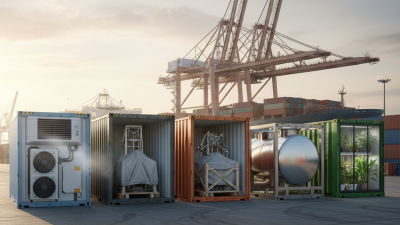
Specialty shipping containers are designed for cargo that standard enclosed boxes cannot safely or efficiently carry. They include refrigerated units, open-top containers, flat racks, tank containers, and units with reinforced interiors. Each solves a different problem: stable temperature, unusual height, excessive width, liquid containment, or heavy loading. They are needed when cargo dimensions, sensitivity, weight, or loading method exceed ordinary container limits. A pharmaceutical shipment may require monitored cooling, while a generator might need a flat rack and engineered securing. The choice should follow cargo measurements, center of gravity, lifting points, route conditions, and handling equipment. Small errors matter. A door clearance overlooked at origin can create delays, repacking costs, or unsafe handling.
Tips: Measure the packed cargo, not the product alone. Record height, width, length, weight, and lifting points with photographs. Ask the carrier about internal dimensions, payload limits, ventilation, temperature records, and approved securing methods. Keep a written loading plan.
Choosing a container is also a risk assessment. Review weather exposure, port transfers, road restrictions, and whether cranes or forklifts can reach the cargo. For temperature-sensitive freight, define an acceptable range and a response plan for power interruptions. For oversized equipment, confirm the route before booking space. In practice, teams sometimes select equipment too quickly because the cargo looks manageable. That judgment can be wrong. A specialist survey or cargo engineer may be worthwhile when dimensions are irregular or the load is exceptionally heavy. Reliable documentation, current equipment specifications, and pre-shipment inspection help turn a convenient choice into a defensible one.
Specialty shipping containers are designed for cargo that cannot be handled efficiently in a standard dry container. Refrigerated containers are used for temperature-sensitive goods, open-top containers suit tall or crane-loaded cargo, and tank containers transport bulk liquids and gases. The chart shows representative nominal internal capacities; actual specifications vary by model, insulation, fittings, and payload regulations. Flat racks are not included because they are open platforms rather than enclosed-volume containers.
Before choosing a specialty shipping container, define cargo behavior, not only cargo size. Measure length, width, height, weight, and center of gravity. Add clearance for lifting equipment, bracing, airflow, and inspection access. A tight fit may reduce movement, but it can also complicate loading and damage fragile surfaces.
Temperature-sensitive cargo needs a documented range, not a guess. Record the product’s acceptable temperature, humidity tolerance, ventilation needs, and maximum exposure time. The Global Cold Chain Alliance reported more than 719 million cubic metres of refrigerated warehouse capacity worldwide in its 2024 report.
Measure heat generation, packaging gaps, and door-opening risks. Cold air alone is not enough.
Inspect the loading route before selecting the container. Check crane limits, ramp angles, turning space, road restrictions, and unloading equipment. Heavy machinery may need reinforced flooring or wider access. Long cargo may require open-side access, while sensitive equipment may need suspension or shock monitoring.
The first estimate is often wrong. Recheck every measurement against the packed cargo, not the product brochure.
UNCTAD recorded 2.4% growth in seaborne trade during 2023, increasing pressure on reliable capacity planning.
A practical assessment should include photos, sketches, weight distribution, and a contingency allowance.
2026 How to Choose Specialty Shipping Containers?
Which Specialty Container Types Match Different Shipping Needs?
Choosing a specialty container starts with the cargo, not the container name. Refrigerated containers suit seafood, produce, medicines, and other temperature-sensitive goods. They need stable power and verified temperature records. Flat rack containers handle heavy machinery, vehicles, and oversized equipment. Open-top containers help when cranes load tall or awkward cargo. Tank containers are designed for approved liquids and require careful compatibility checks. A wooden crate may look simple, but its width can still exceed a standard loading limit.
Tips: Measure every item, including straps and protective packaging. Check weight distribution before loading. Ask the carrier about power connections, ventilation, and route restrictions. Review inspection records and clean-container requirements. Small omissions create expensive delays.
In real shipping work, the best choice often depends on loading access. A factory with overhead cranes may prefer an open-top design. A narrow loading dock may need a different solution. Do not trust estimates alone. Confirm internal dimensions, door openings, floor strength, and lifting points in writing. Moisture-sensitive cargo may need desiccants, liners, or ventilation, depending on the route. These details are easy to overlook. I would also allow extra time for approval, because specialty equipment is not always available nearby. A perfect container on paper can still fail at the dock.
| Specialty Container Type | Best Match for Shipping Needs | Typical Cargo | Main Design Features | Common Size Options | Typical Payload Range | Important Selection Factors |
|---|---|---|---|---|---|---|
| Refrigerated Container | Temperature-sensitive cargo requiring controlled conditions | Fresh produce Frozen food Pharmaceuticals Flowers | Integrated refrigeration unit, insulated walls, floor air channels, and temperature monitoring capability. | 20 ft and 40 ft; high-cube versions are also widely used | Approximately 25–29 metric tonnes, depending on the unit and route limits | Required temperature range, ventilation, humidity control, power availability, pre-trip inspection, and continuous monitoring. |
| Insulated Container | Cargo that needs thermal protection but not active refrigeration | Chocolate Cosmetics Chemicals Temperature-sensitive materials | Insulated panels help slow heat transfer; the container does not normally provide active cooling. | 20 ft and 40 ft configurations, subject to equipment availability | Generally similar to a standard dry container of the same size, subject to tare weight | Expected transit duration, outside temperature, allowable temperature variation, insulation condition, and use of thermal packaging. |
| Open-Top Container | Tall or heavy cargo that cannot be loaded through standard doors | Machinery Scrap metal Timber Industrial equipment | Removable roof or tarpaulin allows crane loading; cargo can be secured from the top. | 20 ft and 40 ft; internal height is usually lower than the external height | Often approximately 26–30 metric tonnes, depending on construction and transport restrictions | Cargo height, center of gravity, lifting method, tarpaulin protection, lashing points, and whether the cargo exceeds the profile limit. |
| Flat Rack Container | Oversized, wide, or exceptionally heavy cargo | Construction equipment Vehicles Steel structures Transformers | Strong base with fixed or collapsible end walls; open sides and top provide flexible loading space. | 20 ft and 40 ft; fixed-end and collapsible-end designs are available | Approximately 25–40 metric tonnes, depending on the equipment specification | Cargo dimensions, weight distribution, lashing plan, over-height or over-width approvals, route clearance, and crane requirements. |
| Platform Container | Project cargo that exceeds the width, height, or length of a flat rack | Large industrial modules Boilers Heavy engineering units Large fabricated sections | Reinforced floor platform without side walls or end walls, allowing very large cargo footprints. | Commonly 20 ft and 40 ft platform units | Varies considerably; selected according to floor strength and cargo weight distribution | Floor loading, support points, securing design, special permits, handling equipment, and compatibility with the vessel stowage plan. |
| Tank Container | Bulk liquid, liquefied gas, or powdered cargo requiring a certified tank system | Food-grade liquids Chemicals Oils Hazardous liquids | Stainless-steel or specialized tank enclosed within a standard container frame; may include heating, insulation, or pressure equipment. | Usually built within a 20 ft intermodal frame; capacity varies by tank design | Often approximately 20–26 metric tonnes of product, subject to density and regulations | Product compatibility, tank certification, pressure rating, hazardous-goods classification, filling ratio, cleaning, and discharge equipment. |
| Ventilated Container | Cargo that needs air circulation and protection from direct weather exposure | Coffee Cocoa Agricultural products Moisture-sensitive goods | Passive or powered ventilation openings help reduce heat and moisture accumulation inside the container. | Most commonly 20 ft; availability varies by trade lane | Usually comparable to a standard dry container, adjusted for the unit's tare weight | Required airflow, product respiration, humidity levels, packaging, condensation risk, and protection against pests or contamination. |
| Bulk Container | Dry, free-flowing bulk cargo that can be loaded and discharged through dedicated openings | Grain Animal feed Plastic granules Minerals | Liner or specialized internal system with loading and discharge openings designed for dry bulk handling. | Commonly 20 ft; equipment varies according to cargo and terminal systems | Determined by cargo density, container volume, axle limits, and maximum gross weight | Flow characteristics, dust control, liner compatibility, loading method, discharge equipment, cleaning, and cargo segregation. |
| Side-Opening Container | Cargo that needs wide lateral access for loading, picking, or display | Palletized goods Long products Retail fixtures Event equipment | Large side doors or bi-fold doors provide access along much of the container length. | 20 ft and 40 ft, depending on the door configuration | Usually similar to a dry container of the same size, subject to additional door weight | Door clearance, structural strength, weather sealing, forklift access, loading sequence, and available terminal handling equipment. |
| High-Cube Container | Voluminous cargo that needs extra internal height rather than special temperature control | Furniture Light machinery Textiles Large packaged goods | Approximately 30 cm more external height than a standard-height container, providing additional internal volume. | Most commonly 40 ft and 45 ft; availability depends on the service route | Generally up to the applicable maximum gross-weight limit, with payload reduced by the unit's tare weight | Cargo cube, door height, inland bridge clearance, terminal acceptance, stacking limitations, and route-specific equipment availability. |
Note: Dimensions, payload, temperature capability, and equipment availability vary by container specification, carrier, terminal, cargo density, and local road or rail regulations. Confirm the exact equipment data and transport requirements before booking.
Choosing a specialty shipping container starts with the material. Corrugated plastic is light, washable, and useful for repeated handling. Aluminum offers strength without excessive weight. Foam protects fragile surfaces, but it may compress after several shipments. Wooden cases provide rigidity, although moisture can become a problem. In practice, material choice should match the product’s weight, sensitivity, and travel conditions.
Size matters more than many buyers expect. A container with extra space allows movement and impact damage. One that is too tight may crush corners or strain seals. Measure the product, including handles, cables, and protective wrapping. Then check internal dimensions, not only external measurements. Features such as adjustable inserts, shock indicators, stackable walls, and waterproof closures can improve protection. Still, every feature adds cost or maintenance. More protection is not always better.
Tips: Test a sample before ordering in volume. Place the packed item inside, shake the container gently, and inspect contact points. Check whether workers can lift it safely. Consider temperature changes, vibration, dust, and rain during transport. Protection levels should reflect actual risks, not optimistic assumptions. A container may pass a basic drop test yet fail after repeated use. I have seen small gaps around lids create larger problems than expected. Recheck the design after the first shipment.
2026 How to Choose Specialty Shipping Containers?
Selecting a specialty shipping container in 2026 requires more than matching dimensions to cargo. Verify the rules before requesting a quotation. Ask the destination port, customs broker, and carrier which container standards apply. Check permitted dimensions, weight limits, inspection certificates, labeling, and documentation. For temperature-sensitive units, confirm the required temperature range and power connection. For oversized equipment, request written clearance for route height, width, and lifting points. Regulations can change between origin and destination. Details still get missed. Keep copies of every approval.
Build a complete cost sheet. Include purchase or rental price, modifications, inland haulage, ocean freight, insurance, cleaning, storage, and possible detention charges. A low daily rate can hide expensive handling. Ask whether maintenance, testing, and emergency service are included. Confirm currency, taxes, deposit terms, cancellation fees, and the date when charges begin. Get these details in writing. Verbal promises are weak evidence.
Availability should be checked against the exact specification, not a similar photograph. Request the unit’s location, serial number, inspection date, internal dimensions, payload, and earliest release date. A reliable supplier should provide maintenance records, recent condition photos, and a clear damage-report process. Contact two references with comparable shipping needs. If possible, inspect the container or use an independent surveyor before payment. I have seen schedules fail because a “ready” unit still needed repairs. That lesson is easy to overlook. Leave time for a second inspection and a realistic transport buffer. Suppliers who resist basic records deserve closer scrutiny.