
Si-TPV 3100-60A: Enabling More Durable, Flexible, and Sustainable TPU Solutions for EV Charging Cables
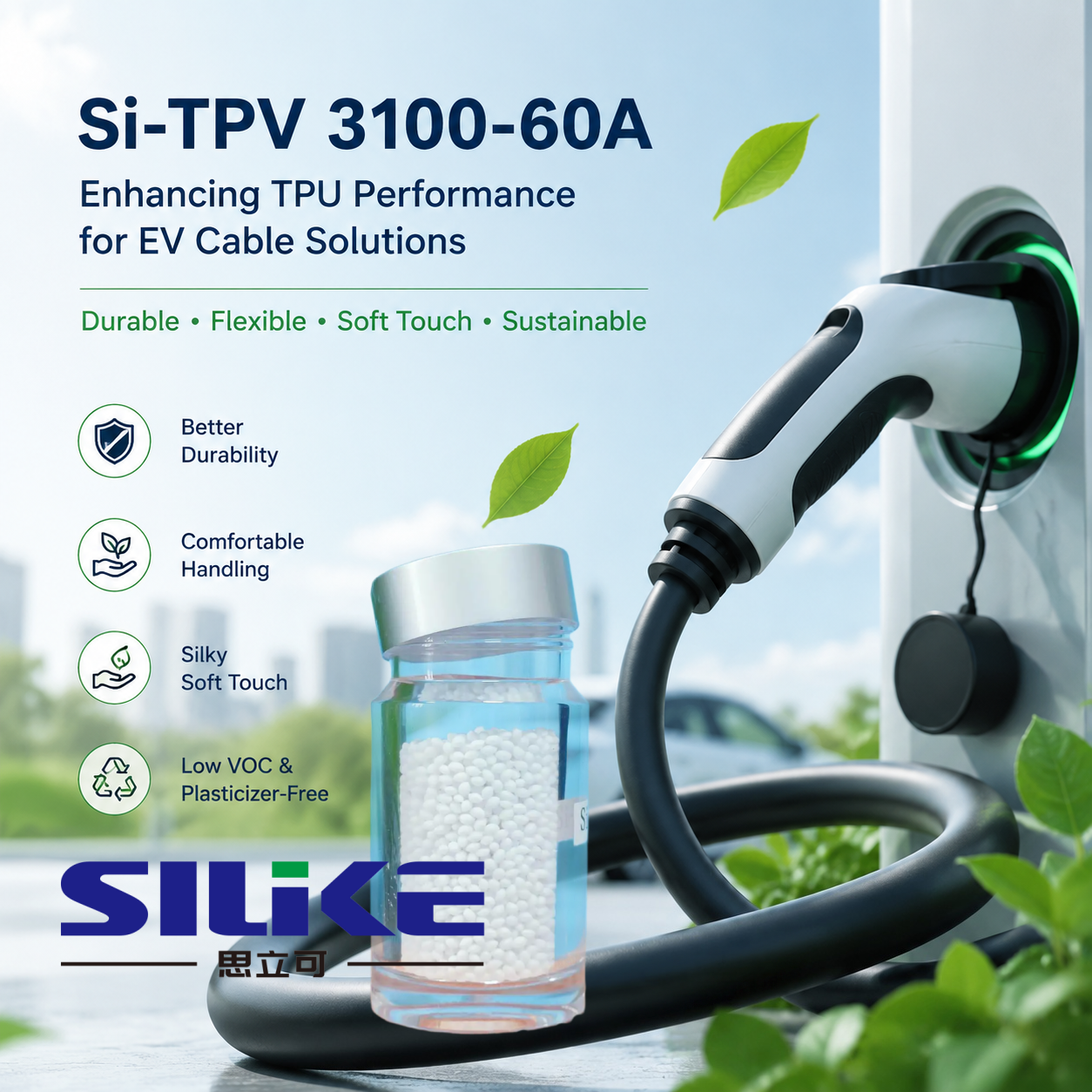
Thermoplastic Silicone Elastomer Modifier Addresses Growing Demands for High-Performance EV Cable Materials
As electric vehicles (EVs) continue to reshape global transportation, charging infrastructure has become a critical factor influencing user experience and EV adoption. Beyond charging speed and network availability, the durability, flexibility, and surface performance of EV charging cables are receiving increasing attention.
Modern EV charging cables must withstand thousands of bending cycles, repeated plugging and unplugging, outdoor exposure, temperature fluctuations, and daily mechanical stress while maintaining a comfortable handling experience.
Recent industry developments highlight the growing importance of cable durability. For example, ChargePoint introduced cut-resistant charging cables in response to increasing concerns around cable damage and infrastructure reliability. (Source from The Verge: charger cable-cutting crooks ChargePoint is doing something about all the EV). Meanwhile, research published in Polymers examined the mechanical behavior of EV charging cables, emphasizing that polymer jackets and insulation layers experience significant tensile, thermal, and mechanical stresses during operation. (Source from MDPI: Determination of Tensile Characteristics and ElectricalResistance Variation of Cables Used for Charging Electric VehiclesI)
To help manufacturers overcome these challenges, SILIKE Si-TPV 3100-60A provides an innovative thermoplastic silicone elastomer solution that enhances TPU performance through advanced polymer modification technology.
Si-TPV 3100-60A: TPU Modifier for EV Cable Applications
Si-TPV 3100-60A is a dynamic vulcanized thermoplastic silicone-based elastomer designed to enhance TPU systems.
Unlike traditional silicone additives or softeners, Si-TPV integrates crosslinked silicone rubber particles into a TPU matrix through dynamic vulcanization technology.
This unique structure combines:
TPU Matrix Advantages:
- Mechanical strength
- Thermoplastic processing capability
- Compatibility with existing manufacturing processes
Silicone Elastomer Advantages:
- Silky soft touch
- Low friction surface
- Excellent stain resistance
- Long-term surface stability
The result is a high-performance silicone-based thermoplastic elastomer modifier that helps TPU materials achieve improved durability, comfort, and aesthetics.

The Challenge: Why Traditional TPU Cable Materials Need Performance Upgrades
Thermoplastic polyurethane (TPU) has become one of the preferred materials for EV charging cable jackets due to its:
- Excellent abrasion resistance
- High tensile strength
- Good flexibility
- Chemical resistance
- Processing advantages
However, as EV charging applications become more demanding, conventional TPU systems may face several challenges:
1. Surface Wear During Long-Term Use
2. Limited Soft-Touch Experience
3. Balancing Flexibility and Mechanical Strength
EV charging cables are frequently:
- Dragged across concrete surfaces
- Bent repeatedly during storage
- xposed to outdoor environments
Over time, this can lead to:
- Surface scratches
- Loss of appearance quality
- Reduced user experience
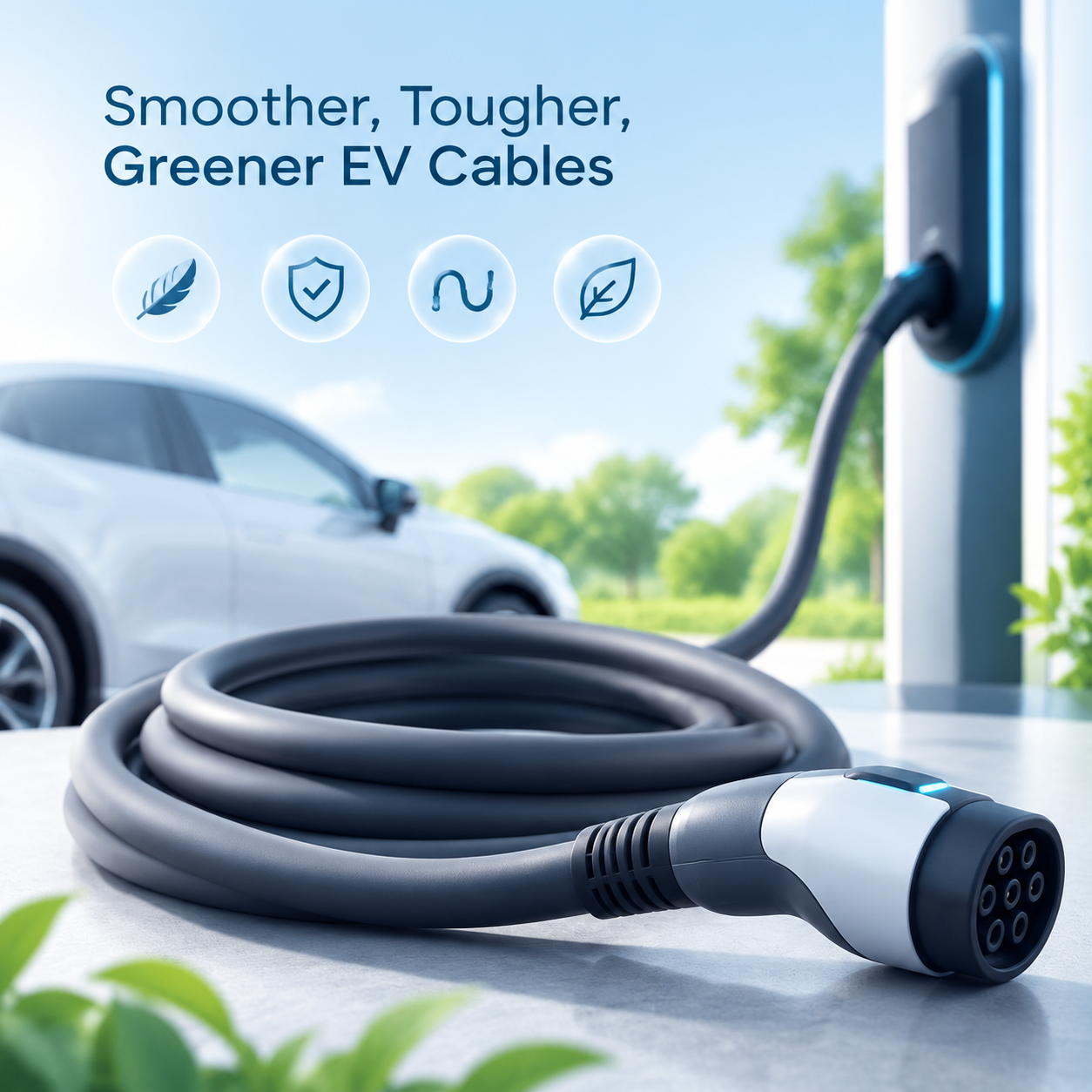
Key Performance Benefits of Si-TPV 3100-60A Modified TPU for EV Cable Applications
By incorporating silicone elastomer characteristics into TPU systems, Si-TPV 3100-60A helps improve the overall performance of TPU-based EV charging cable materials. Its dynamic vulcanized thermoplastic silicone elastomer structure enhances surface smoothness, scratch resistance, and wear resistance, helping cables better withstand daily mechanical stress, repeated handling, and long-term outdoor use. For EV charging cable manufacturers, this means improved durability, better appearance retention, and reduced surface degradation throughout the product lifecycle.
Beyond durability, Si-TPV 3100-60A modification enhances TPU flexibility and handling comfort. EV charging cables need to maintain reliable mechanical performance while remaining easy for users to bend, carry, and store. By providing a softer touch, improved flexibility, and a more comfortable user experience, Si-TPV 3100-60A is suitable for applications such as EV charging pile cables, portable EV charging cables, and other flexible electrical cable solutions.
As automotive products increasingly focus on user interaction and premium material experiences, surface quality has become an important factor alongside functionality. Si-TPV 3100-60A delivers a silicone-like silky touch, dry and smooth surface feel, reduced sticky sensation, and premium matte appearance, enabling manufacturers to create EV cables with both high performance and enhanced tactile appeal. In addition, its plasticizer-free formulation, low VOC characteristics, reduced migration concerns, and long-term surface stability support the growing demand for more sustainable and safer polymer solutions in automotive applications. These advantages make Si-TPV 3100-60A a versatile TPU modifier for developing durable, comfortable, and environmentally conscious EV cable materials.
Recommended Applications of Si-TPV 3100-60A Modified TPU
Si-TPV 3100-60A is designed for a wide range of applications where enhanced durability, flexibility, surface quality, and soft-touch performance are required. In EV charging cable jackets, it helps improve abrasion resistance, surface durability, and handling comfort, while providing a more premium tactile experience for users. Its silicone-based elastomer characteristics also make it suitable for flexible electrical cables, including industrial cables, consumer electronic cables, and high-flex cable applications, where enhanced bending durability, reduced surface friction, and improved appearance retention are essential for long-term performance.
Beyond cable applications, the performance advantages of Si-TPV 3100-60A modified TPU can also support the development of automotive soft-touch components, including interior soft-touch parts, touch interfaces, and protective components. As the automotive industry continues to explore sustainable, durable, and high-quality material solutions to enhance in-vehicle experiences, Si-TPV 3100-60A provides manufacturers with a versatile material option that combines functional performance with improved tactile comfort and aesthetic appeal.
Building the Future of High-Performance EV Cable Materials
As EV charging infrastructure expands globally, cable materials must evolve beyond basic protection functions. Future EV charging cables require a combination of:
- Durability
- Flexibility
- Sustainability
- Premium user experience
With its dynamic vulcanized thermoplastic silicone elastomer technology, Si-TPV 3100-60A provides manufacturers with a versatile TPU modification solution for creating more durable, comfortable, and high-quality EV charging cable products.
By bridging the performance gap between TPU and silicone rubber, Si-TPV helps enable the next generation of sustainable soft-touch polymer solutions.
Contact SILIKE to explore how Si-TPV 3100-60A can upgrade your TPU applications with enhanced durability and superior surface performance.
Contact
SILIKE Silicone Materials Team
Website: https://www.si-tpv.com/
Email: sale@ourflhome.com
Inquiry: Available via official website contact form

© 2023 Integrated Modular Solutions. All Rights Reserved