
Choosing among the top EVA Shoe Mould manufacturers requires more than comparing unit prices. Buyers must examine tooling accuracy, foam compatibility, testing discipline, and after-sales support.
The global footwear market continues to expand. Grand View Research valued it at approximately USD 476 billion in 2023 and expects continued growth through 2030. ResearchAndMarkets also identifies EVA foam as a major material in lightweight footwear and sports products. These figures show strong demand, but they do not guarantee reliable mould production. A beautiful sample can still fail during repeated compression.
Matt Priest, President and CEO of the Footwear Distributors and Retailers of America, has stated, “Visibility is the key to resilience.” That principle applies directly to EVA mould sourcing. Buyers need visible specifications, trial records, material data, and production timelines. A dependable supplier should explain aluminium grades, CNC tolerances, venting design, cooling channels, and expected mould life. Factory photographs help. Measured inspection reports help more.
This guide evaluates manufacturers through practical evidence, not marketing claims. It considers prototype speed, dimensional consistency, technical communication, export experience, and corrective-action procedures. ISO 9001 certification can support confidence, but certification alone proves little. Ask for recent references.
There is no perfect shortlist. Some suppliers offer excellent prices but limited engineering support. Others deliver sophisticated tooling at a higher cost. That trade-off deserves honest review. For global buyers, the best EVA Shoe Mould partner is not always the cheapest factory. It is the manufacturer that repeatedly turns drawings into stable, production-ready soles.
EVA Shoe Moulds: Materials, Features, and Manufacturing Principles
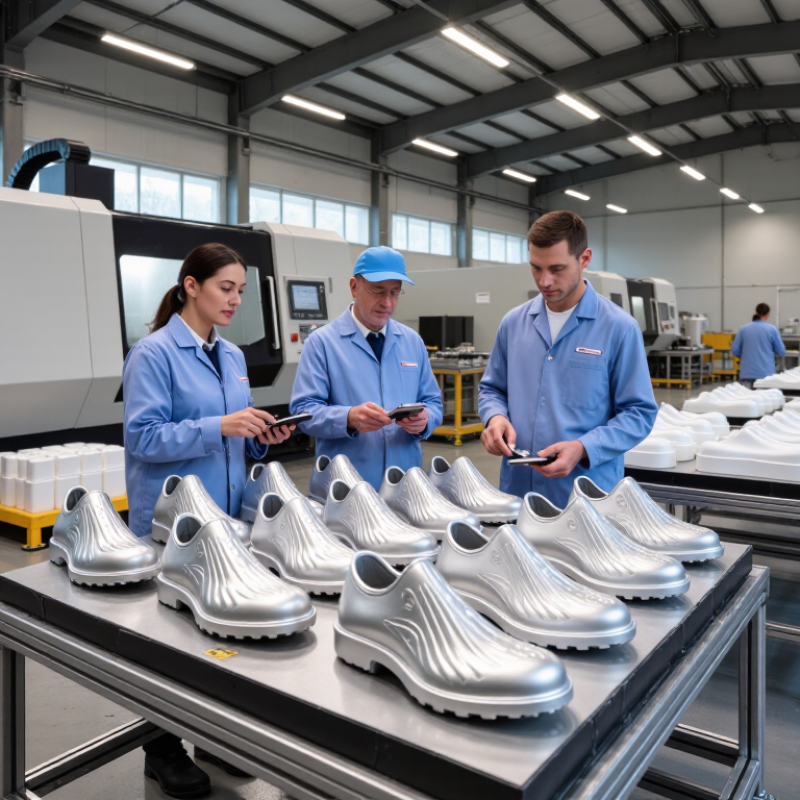
EVA shoe moulds shape lightweight soles, sandals, and midsoles through controlled heat and pressure. Their performance depends on mould material, cavity accuracy, and foam expansion settings. Aluminum moulds offer fast heat transfer and easier handling. Steel moulds provide greater wear resistance for long production runs. Both options require accurate CNC machining and careful surface finishing.
A reliable mould includes balanced cavities, smooth edges, effective vents, and stable alignment. Vents release trapped air during foaming and reduce surface marks. Designers must also allow for EVA expansion and cooling shrinkage. Small errors can change sole dimensions noticeably. In practical production, test samples reveal problems that drawings may hide. No mould is perfect. Even experienced teams may adjust pressure, temperature, or vent positions after testing.
Tips: Check the EVA grade before selecting the mould structure. Confirm expected density, expansion rate, and production volume with the manufacturer. Inspect sample soles for weight, hardness, edge definition, and uneven cell patterns. Keep cavity surfaces clean and apply suitable maintenance after production. A cheaper mould can become expensive when correction work delays delivery. Buyers should request material certificates, dimensional reports, and clear trial records. Good documentation improves reliability, although it cannot replace hands-on inspection.

Top EVA Shoe Mould Manufacturers for Global Buyers
Selecting an EVA shoe mould manufacturer requires more than comparing prices. Experienced buyers inspect mould accuracy, material quality, and production consistency. Ask about aluminium grades, CNC machining, cavity tolerances, and surface finishing. These details affect foam expansion, shoe dimensions, and final appearance. Request a sample mould or trial pair before approving large orders. A reliable manufacturer should provide inspection records, technical drawings, and clear revision procedures. Photos alone are not enough.
Production capability also matters. Check whether the factory can handle your expected order volume without reducing precision. Review its testing process for size stability, density control, demoulding performance, and repeated-use durability. Practical experience often reveals problems that brochures do not mention. Communication is equally important. Timely engineering replies, accurate quotations, and complete shipping documents reduce costly misunderstandings. Certifications may support credibility, but they should match actual production practices. A certificate by itself proves little.
Tips: Compare at least three suppliers using the same technical brief. Ask for dimensional reports and references from similar footwear projects. Confirm lead times in writing, including sampling and mould corrections. Inspect packaging details, especially for long-distance transport. An inexpensive mould can become costly after repeated repairs. No evaluation is perfect. Leave room for trial results, design changes, and honest supplier feedback.
| Evaluation Dimension | Why It Matters for EVA Shoe Moulds | Recommended Verification Method | Practical Benchmark | Suggested Weight |
|---|---|---|---|---|
| Material Selection | The mould material affects thermal stability, wear resistance, surface finish, machining accuracy, and service life. | Request the material grade, hardness range, heat-treatment record, and material certificate for each mould component. | Material specifications should be documented and consistent with the intended EVA compression or injection process. | 15% |
| Dimensional Accuracy | Accurate cavity dimensions help control shoe size, fit, density distribution, sole geometry, and repeatability between production batches. | Review 2D drawings, 3D CAD data, coordinate-measuring-machine reports, and first-article inspection results. | Tolerance requirements should be agreed in writing before production and verified against the approved technical drawing. | 15% |
| Ventilation and Air-Release Design | Effective air release reduces voids, incomplete filling, surface defects, and inconsistent expansion during EVA moulding. | Ask for the venting layout, trial-moulding records, defect analysis, and corrective-action documentation. | The design should be validated through production trials using the buyer’s actual EVA compound and process conditions. | 12% |
| Surface Finish and Texture Reproduction | The cavity surface determines the appearance, texture, branding-free visual details, and demoulding performance of the finished sole. | Inspect polished areas, texture samples, surface roughness records where applicable, and approved sample soles. | The final mould should reproduce the approved texture uniformly across all cavities and production lots. | 10% |
| Thermal and Process Compatibility | EVA moulds must withstand the temperature, pressure, cycle time, and release conditions used by the buyer’s equipment. | Compare the mould design with the press or injection-machine specifications and review documented trial parameters. | Compatibility should be confirmed on the buyer’s intended production equipment before mass manufacturing. | 12% |
| Prototype and Sampling Capability | Reliable sampling allows design, fit, texture, shrinkage, and production risks to be identified before tooling approval. | Evaluate prototype lead time, sample approval procedures, revision control, and the number of included correction rounds. | A formal sample approval process should exist before the mould enters regular production. | 10% |
| Quality Management System | Documented quality controls reduce errors in design transfer, machining, assembly, inspection, and delivery. | Request a valid quality-management certificate, inspection plan, calibration records, and nonconformance procedure. | A documented quality system, such as ISO 9001-based controls, is preferable for international sourcing. | 10% |
| Lead-Time Reliability | Late tooling can delay footwear development, seasonal launches, factory trials, and customer deliveries. | Compare quoted lead time with documented delivery performance and request a stage-by-stage production schedule. | The supplier should provide clear milestones for design confirmation, machining, assembly, sampling, correction, and shipment. | 8% |
| After-Sales Tooling Support | Technical support is important for mould cleaning, maintenance, repair, dimensional adjustments, and production troubleshooting. | Review warranty terms, spare-part availability, response times, maintenance instructions, and remote troubleshooting procedures. | Support terms should define response channels, covered defects, repair responsibilities, and the warranty period. | 5% |
| Export and Packaging Readiness | Proper export documentation and protective packaging reduce customs delays, corrosion, impact damage, and installation problems. | Check commercial documents, packing specifications, moisture protection, lifting points, and shipment inspection photos. | Packaging should protect precision surfaces and include clear identification, handling instructions, and documentation. | 3% |
| Total Evaluation Weight | 100% | |||
Buyer Note: Supplier performance should be assessed using technical documents, physical samples, trial-production results, inspection records, and written commercial terms rather than price alone.
Leading EVA mould suppliers usually begin with 3D shoe data, not a rough sketch. Engineers check sole thickness, material flow, shrinkage, and release angles before cutting metal. This stage prevents uneven foam density around the heel and toe. It also exposes design problems early. Sometimes, the first drawing looks correct but fails during demoulding.
CNC machining creates the main cavity with controlled surface accuracy. EDM may refine narrow grooves, logos, or deep texture areas. Suppliers then add vents, cooling channels, alignment pins, and drainage details. These small features matter. Poor venting can leave burn marks or incomplete edges. Aluminum is common for short and medium production runs because it transfers heat quickly and allows efficient machining.
Reliable factories normally run trial shots before final approval. Technicians inspect dimensions, weight, hardness, bonding areas, and surface finish. They compare samples against approved drawings and record adjustments for repeat orders. A skilled team may alter vent depth or polish only selected zones. This sounds minor, but it can change the shoe’s appearance. Not every trial succeeds. Uneven expansion, trapped air, or a tight corner may require another machining cycle. Clear inspection records and measured feedback make the process more dependable for global buyers.
The chart shows typical working-day requirements for major EVA footwear mould production stages. CNC cavity machining generally takes the longest because it includes roughing, finishing, and dimensional control. Actual timing varies according to mould size, cavity count, surface texture, design revisions, and trial results.
Top EVA Shoe Mould Manufacturers for Global Buyers
Quality control begins with the mould, not the finished shoe. Experienced manufacturers check aluminium hardness, cavity balance, venting, and dimensional stability. These details affect foam expansion, weight, rebound, and surface texture. A 0.3-millimetre mismatch can create visible sole lines. Small errors become expensive at scale.
The World Footwear Yearbook 2024 reported approximately 22.4 billion pairs of footwear were produced globally in 2023. This volume increases pressure on suppliers to deliver repeatable mould performance. Reliable factories should provide trial records, material certificates, inspection photos, and documented correction procedures. They should also test critical dimensions after repeated heating cycles. One sample is not enough.
Customization requires more than copying a drawing. Buyers should confirm density targets, logo placement, drainage channels, tread depth, and release angles before machining. The EVA Foam Market report by Grand View Research identifies footwear as a major application and forecasts continued market growth through 2030. That growth makes traceability more important. ISO 20344 provides footwear test methods, while ISO 20347 covers occupational footwear requirements. Not every EVA sandal needs every standard, but export markets may require additional testing. Compliance must match the product and destination.
Quality can still vary between production lots. That is the uncomfortable part. A capable manufacturer admits this risk and controls it through sampling plans, first-article approval, and batch records. The best partnership leaves an audit trail, not just attractive prototypes.
Selecting a reliable EVA shoe mould manufacturer requires more than comparing online quotations. Experienced buyers inspect machining accuracy, cavity balance, cooling channels, and previous export records. A factory should explain its steel grade, CNC process, trial schedule, and tolerance control clearly. Ask for sample photos and a physical test pair before approving production. Small shape differences can affect comfort, trimming time, and material waste.
Pricing usually depends on cavity count, mould size, steel selection, surface texture, and design complexity. A low quotation may exclude sampling, revisions, packaging, or delivery to the port. Request a detailed pro forma invoice with tooling costs separated from production costs. Clarify payment stages and revision limits.
In practice, buyers sometimes focus too heavily on the first price. That can be a costly mistake. One extra trial may save weeks of factory adjustment later.
Export planning needs equal attention. Confirm the agreed Incoterm, carton dimensions, gross weight, and required shipping documents. The manufacturer should protect mould surfaces with rust prevention and secure internal packaging. Check whether the production schedule includes local holidays and port delays. Remote approval is convenient, but imperfect. Video inspections can miss alignment problems. A controlled sample review, dimensional report, and pre-shipment inspection create stronger evidence for international purchasing decisions.