China Top 10 Custom Made Container Manufacturers?

China’s container manufacturing sector supports construction, logistics, energy, events, and temporary workspaces. This guide examines China’s top 10 custom made containers manufacturers through practical buying criteria. It considers design capability, production experience, material quality, certifications, and after-sales support.

A reliable supplier should explain steel grades, insulation options, welding methods, paint systems, and load requirements clearly. Factory photographs help, but they do not replace inspection records. Buyers should also review drawings, prototypes, delivery schedules, and warranty terms before placing an order. Small details matter. Door alignment, roof drainage, floor strength, and ventilation can affect daily use.

The selected companies are assessed using public information, product ranges, project experience, and communication quality. Their abilities may differ across offices, accommodation units, refrigerated models, and specialized enclosures. A manufacturer with strong standard products may not excel at complex engineering. That distinction is easy to miss.

This list is not an absolute ranking. Market data changes, and some suppliers publish limited technical information. That limitation deserves attention. Independent factory audits, sample approvals, and third-party inspections can reduce avoidable risks. Readers should confirm current certifications and export experience directly with each manufacturer.

The goal is practical guidance, not promotional praise. Whether you need one modified unit or a large project order, clear specifications remain essential. A good supplier listens carefully, identifies design problems early, and documents every agreed detail. That is where professional judgment matters most.
China Top 10 Custom Made Container Manufacturers?

What Are Custom-Made Containers and Why Are They Needed?

Custom-made containers are engineered units built around a cargo’s dimensions, weight, handling method, or operating environment. Unlike standard dry boxes, they may include open sides, reinforced floors, ventilation, insulation, access doors, or internal lifting points. A useful example is a 4.8-meter machine that cannot pass through a standard end door. A side-opening design can reduce handling damage and loading time.

The demand is substantial. UNCTAD’s Review of Maritime Transport 2024 states that ships carry over 80% of global merchandise trade by volume. This scale exposes weaknesses in standard equipment. Custom containers help protect temperature-sensitive food, construction equipment, exhibition materials, and industrial components during repeated transfers. The World Bank’s Logistics Performance Index 2023 also evaluates reliability, tracking, and delivery timeliness across 139 economies. These measures show why cargo protection alone is not enough. A container must also support predictable handling.

Good specifications begin with field experience. Engineers should confirm payload, center of gravity, crane points, corrosion exposure, ventilation, and local transport limits. ISO-compatible dimensions may simplify intermodal movement, but compatibility is not guaranteed. That detail is often underestimated. A container can look suitable yet fail at a terminal gate or during lifting. Buyers should request drawings, load calculations, coating details, inspection records, and a realistic maintenance plan. The uncomfortable truth is that “custom” does not automatically mean better. Poor measurements can create expensive, unusable steel.

China Top 10 Custom-Made Container Manufacturers? What Are Custom-Made Containers and Why Are They Needed?

Typical internal volume of widely used ISO dry container formats

Custom-made containers are designed for requirements that standard containers cannot fully meet, such as unusual cargo dimensions, specialized loading systems, temperature control, extra ventilation, reinforced structures, or specific access doors. The chart compares approximate internal volumes of common ISO dry container formats. Actual usable capacity may vary slightly according to construction details, insulation, doors, and fittings.

Reference basis: typical ISO container dimensions and commonly published industry specifications. Values are approximate.

How to Evaluate China’s Custom-Made Container Manufacturers

Evaluating China’s custom-made container manufacturers requires more than comparing prices. Start by checking production experience, engineering capability, and quality records. Ask for drawings, material grades, weld procedures, and inspection reports. A reliable manufacturer should explain how it controls steel thickness, door alignment, sealing, and corrosion protection. Request photographs from recent projects, not only polished showroom images.

A factory visit can reveal important details. Look at cutting accuracy, welding consistency, surface preparation, and storage conditions. Ask whether each unit receives dimensional checks and water-resistance testing before shipment. For specialized designs, review load calculations and modification limits with a qualified engineer. Confirm compliance with the destination country’s transport and safety requirements. Certificates should be traceable and issued by recognized testing bodies.

Do not accept vague quotations.

A dependable supplier lists steel specifications, coating systems, tolerances, tooling costs, packaging, and delivery terms separately. Check references from customers with similar container requirements. Clarify who handles design changes, spare parts, warranty claims, and damage discovered after arrival. I have found that communication speed matters, but written answers matter more. One weakness remains easy to miss: a manufacturer may perform well on standard units yet struggle with unusual dimensions. A small prototype or pre-production inspection can expose that problem early. Allow time for revisions, because rushed customization often creates expensive compromises.

China Top 10 Custom Made Container Manufacturers? - How to Evaluate China’s Custom-Made Container Manufacturers

No. Evaluation Dimension Practical Benchmark or Requirement Evidence to Request Why It Matters
1 Design and Engineering Capability Ability to convert drawings, cargo specifications, loading conditions, and operating environments into a documented container design. Approved drawings, structural calculations, material specifications, 3D models, and a formal design-change process. Reduces design errors, rework, and performance problems during production or field use.
2 Compliance with Container Standards The design should identify applicable requirements, such as ISO 668 for dimensions, ISO 1161 for corner fittings, ISO 1496-1 for general freight containers, and the CSC Convention where international transport approval is required. Compliance matrix, test reports, certificates, nameplate details, and inspection records from authorized bodies when applicable. Supports safe handling, intermodal compatibility, and legal use in international shipping.
3 Material Quality and Traceability Steel grades, flooring materials, insulation, coatings, fasteners, and other components must match the approved specification and intended service conditions. Mill certificates, incoming inspection records, batch numbers, material traceability logs, and approved supplier lists. Traceable materials make quality problems easier to identify and help maintain consistent product performance.
4 Welding and Fabrication Quality Welding procedures, operator qualifications, dimensional controls, and non-destructive testing should be appropriate for the container’s structural and operating requirements. Welding procedure specifications, welder qualification records, inspection plans, NDT reports, and dimensional inspection results. Good fabrication quality improves structural strength, watertightness, and service life.
5 Customization Range Capability to manufacture modified dimensions, doors, windows, ventilation, electrical systems, shelving, partitions, lifting points, special floors, and other project-specific features. Previous anonymized project drawings, customization checklist, engineering review records, and prototype or sample-unit details. Shows whether the manufacturer can deliver a genuine engineered solution rather than a standard unit with limited modifications.
6 Surface Treatment and Corrosion Protection The coating system should be selected for the cargo, climate, storage period, and exposure environment, with controlled surface preparation and coating application. Surface-preparation records, coating technical data sheets, dry-film-thickness readings, adhesion tests, and visual inspection reports. Proper corrosion protection lowers maintenance needs and extends the container’s usable life.
7 Factory Quality Management A documented quality management system should control purchasing, production, inspection, nonconforming products, corrective actions, and final release. Quality certificates where applicable, process flow charts, inspection and test plans, corrective-action records, and audit reports. A controlled production system provides more reliable quality than visual inspection alone.
8 Testing and Final Inspection Testing should cover dimensions, door operation, weld appearance, water tightness where relevant, load-bearing functions, electrical safety, and special equipment requirements. Factory acceptance test plan, inspection checklist, test videos or reports, calibration certificates, and final-release documentation. Independent or well-documented testing confirms that the finished unit matches the approved design.
9 Production Capacity and Delivery Control The supplier should demonstrate sufficient fabrication capacity, production scheduling, component availability, packaging, and export-loading arrangements for the required quantity and deadline. Capacity statement, realistic production schedule, milestone plan, factory audit findings, packing method, and shipment documentation samples. Helps prevent delays, incomplete shipments, and inconsistent quality across multiple units.
10 Commercial Terms and After-Sales Support The quotation should clearly define specifications, Incoterms, tooling or engineering charges, payment milestones, warranty coverage, spare parts, documentation, and claim procedures. Detailed quotation, technical annex, warranty terms, spare-parts list, service response procedure, and written change-order policy. Transparent terms reduce hidden costs and provide a clear remedy if defects or specification changes occur.

Recommended evaluation method: assign each dimension a score from 1 to 5, verify the supporting evidence, and compare the total result with the project’s technical, regulatory, delivery, and after-sales requirements.

China’s Top 10 Custom-Made Container Manufacturers

China’s Top 10 Custom-Made Container Manufacturers

China remains the main production base for new shipping containers. Drewry’s Container Census has repeatedly placed China’s share above 95% for standard dry-container production. UNCTAD’s Review of Maritime Transport also reports that around 80% of global merchandise trade moves by sea. This scale supports faster material sourcing, specialized welding, and flexible production for custom projects.

A reliable top-ten shortlist should examine more than factory size. Buyers should verify compliance with ISO 668, ISO 1496, and applicable CSC requirements. Quality checks should include weld inspection, door-cycle testing, coating thickness, water resistance, and dimensional accuracy. Practical details matter. A side-opening unit needs reinforced framing. A refrigerated unit needs stable insulation and tested temperature control. Factory audits and production records add useful evidence.

The ranking is not perfectly objective. Some manufacturers publish limited defect rates or delivery data. That weakness deserves attention. Importers should compare independent inspection reports, steel certificates, prototype approvals, and after-sales response times. Drewry’s equipment research shows how strongly container production follows global trade demand, but customization requires deeper evaluation. The strongest suppliers can explain their design changes clearly, document each testing stage, and provide replacement parts without creating avoidable delays. Small details often reveal experience.

What Products and Services Do These Manufacturers Provide?

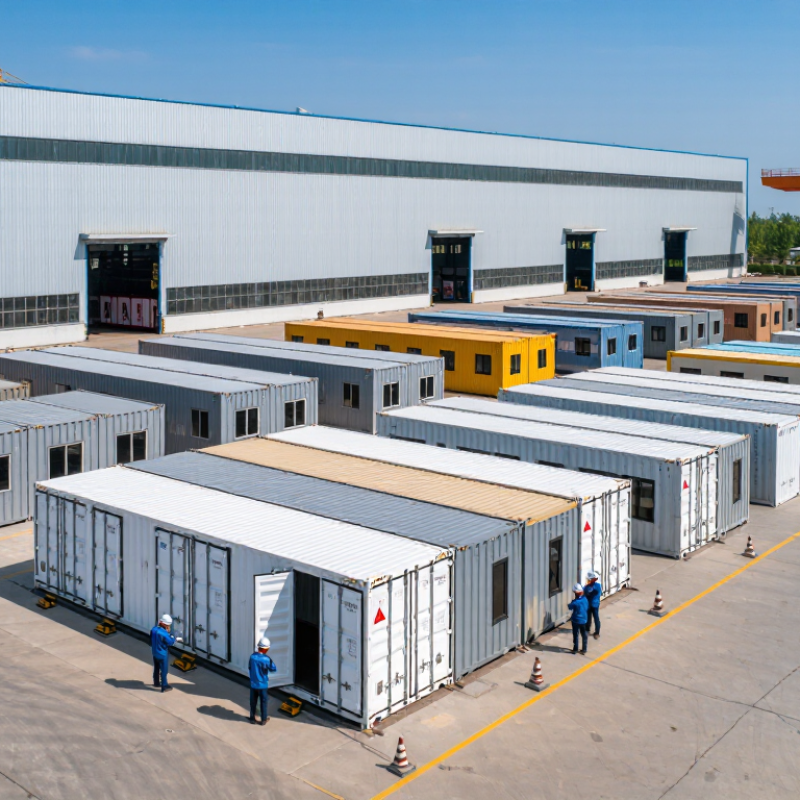
China’s top 10 custom-made container manufacturers typically provide more than steel boxes. They develop practical units for storage, transport, offices, workshops, retail spaces, and temporary facilities. Their product ranges may include standard cargo containers, open-top models, side-opening units, insulated rooms, and modular buildings.

Manufacturers often begin with a drawing or technical specification. Engineers can adjust length, width, door position, window size, ventilation, flooring, and insulation. A workshop may require reinforced flooring and electrical openings. A site office may need insulation, lighting, air conditioning, and secure doors. Custom paint colors and external panels are also available. Small details matter.

Their services usually cover structural design, material selection, welding, surface treatment, assembly, and quality inspection. Some factories provide prototype production before larger orders. They may also arrange loading plans, export documentation, delivery coordination, and after-sales support. Buyers should request steel grades, floor load limits, coating details, and inspection records. Photos alone are not enough.

Experienced suppliers can suggest safer and more economical layouts, but their advice still needs independent checking. No design is perfect. A rushed specification can create expensive changes later. Clear drawings, sample approval, and regular production updates reduce that risk. In my view, reliable communication is as important as manufacturing capacity. The strongest service is not always the cheapest quotation.

How to Choose the Right Manufacturer for Your Project

Choosing a custom-made container manufacturer in China requires more than comparing factory prices. Start with the project brief: cargo type, external dimensions, insulation, loading method, site limits, and required quantity. Ask for drawings, material specifications, welding standards, coating systems, and inspection records. A reliable manufacturer should explain tolerances in plain language. Vague answers are warning signs. Request evidence from similar projects, not polished promises.

Review the factory beyond its website. A video call can show cutting equipment, welding bays, storage conditions, and quality-control stations. If possible, arrange an independent inspection before shipment. Check steel certificates, weld visual checks, leak testing, dimensional reports, and packing methods. Confirm who handles design changes and how revisions are approved. Small changes can create large delays. I would not accept a low quote without a written scope; cheap steel, unclear paint grades, or excluded transport can erase the savings.

Compare manufacturers using a weighted checklist rather than one attractive number. Give separate scores for engineering capability, production capacity, communication, inspection access, lead time, warranty terms, and export documentation. Clarify delivery terms, payment milestones, spare parts, and after-sales response times. Ask how they manage defects after arrival. The answer matters. A trial unit or small first order may reveal more than a long presentation. Even careful teams miss details, so record every assumption and review the final drawing with the installer before production.